In the terminology of printing, we often hear the two words four-color printing and spot color printing. They are widely used in picture albums, books and periodicals, leaflets and various paper box printing products. However, most people do not know when to choose four-color printing and when to choose spot color printing in actual production. Today, the printer will discuss spot color printing and four-color printing with you from the concept, difference to application. Let’s learn together.
Concept
Four-color printing
Four-color printing is the color you need by overprinting the four colors of CMYK (cyan, magenta, yellow, black). In layman’s terms, it is to use the different superpositions of these four colors to get the color you need. As long as the color has a gradient, it is overprinted by four colors. Four-color printing is superimposed by dots, and dots of different colors can be seen with a magnifying glass.

Spot color printing
Spot color printing refers to the printing process of using other colors of ink other than yellow, magenta, cyan and black ink to copy the color of the original. In packaging printing, spot color printing is often used to print large areas of background color. Spot color printing is a single color, without gradient, the pattern is solid, and the dots cannot be seen with a magnifying glass. (Generally speaking, the cost of spot color printing is slightly higher.)

Difference
What are the differences in visual effects between spot color printing and four-color printing?
Spot color printing has lower color brightness and higher saturation; spot color blocks with uniform ink color usually use solid printing, and the amount of ink should be appropriately increased. When the thickness of the ink layer on the layout is large, the sensitivity of the change in ink layer thickness to color changes will decrease, so it is easier to get a uniform and thick printing effect.
The color blocks printed by the four-color printing process are prone to changes in color intensity due to changes in ink layer thickness and changes in printing process conditions. Changes in the degree of dot expansion lead to color changes. Therefore, it is not easy to achieve a uniform ink color effect for the color blocks printed by the four-color printing process.
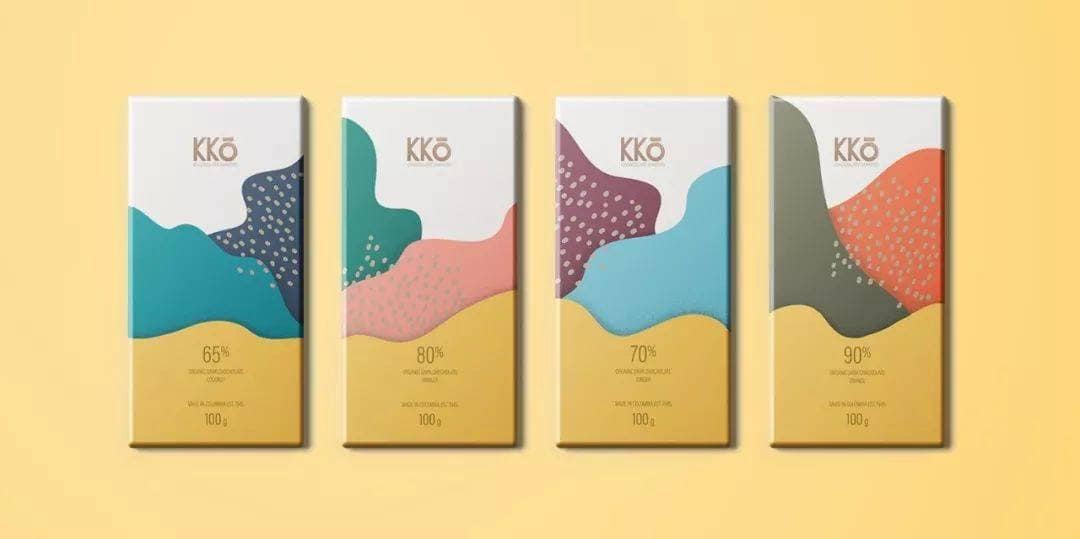
From the perspective of economic benefits, it mainly depends on whether the use of spot color printing technology can save the number of overprints. Because reducing the number of overprints can save both printing costs and pre-press production costs.
If a product has both color layers and large areas of background color, the color layers can be printed in four colors, while the large areas of background color can be printed in spot colors.
Spot color ink
Refers to a pre-mixed specific color ink, such as fluorescent yellow, pearl blue, metallic gold and silver ink, etc. It is not produced by CMYK four-color overprinting. Overprinting means accurate color.
It has the following three characteristics:
Accuracy
Each overprint has its own fixed hue, so it can ensure the accuracy of color in printing, thus solving the problem of color transfer accuracy to a large extent.
Solidity
Spot colors are generally defined by solid colors, no matter how light the color is. Of course, spot colors can also be screened (Tint) to present any shade of spot colors.
Wide color gamut
The color gamut in the overprinting color library is very wide, exceeding the color gamut of RGB, not to mention the CMYK color space, so a large part of the colors cannot be presented by CMYK four-color printing inks.
Application
What products must use four-color printing technology?
Photos taken in the form of color photography that reflect the colorful color changes in nature, painters’ color art works, or other pictures containing many different colors, due to process requirements or economic benefits, must be scanned and separated by an electronic color separation machine or a color desktop system, and then reproduced using a four-color printing process.

What kind of products will use spot color printing?
Some packaging products or book and magazine covers, album covers are often composed of uniform color blocks of different colors or regular gradient color blocks and text. These color blocks and text can be separated and overprinted with four primary color inks, or spot color inks can be mixed, and then only one spot color ink is printed on the same color block. Spot color printing is often used when comprehensively considering improving printing quality and saving overprint times. Packaging printing often uses spot colors to print large areas of background colors.

Summarize
The above is about spot color and four-color printing. When choosing which printing method to use, you need to make comprehensive considerations based on specific needs and requirements. For situations where you need to present a rich and colorful color effect, four-color printing is a good choice; for situations where you need to present a special visual effect, spot color printing is more suitable.Now when faced with the choice between spot color and four-color, I hope you can make the appropriate decision for the product.