For established brands, packaging is no longer just a container. It is a visible extension of brand values, operational efficiency, and environmental responsibility. Many companies struggle to find packaging that looks premium, supports sustainability goals, and scales reliably across markets. Custom paper bags address these challenges by combining flexibility, strength, and design freedom. More importantly, they help brands meet rising consumer expectations without compromising logistics or cost control. This article explores how these bags fit into modern packaging strategies and why they continue to replace plastic and low-quality alternatives in high-standard industries.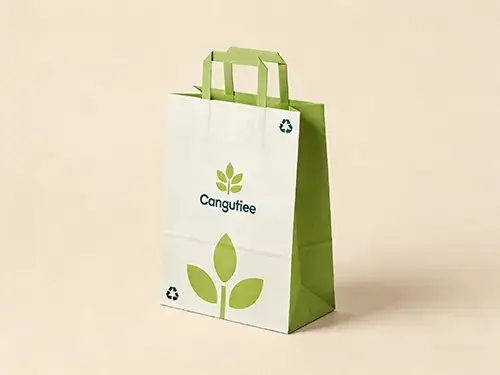
Why Custom Paper Bags Matter in Modern Packaging Strategy
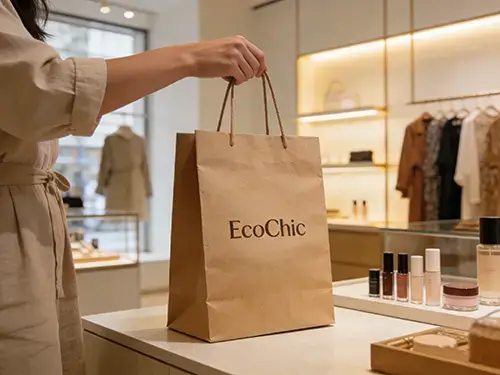
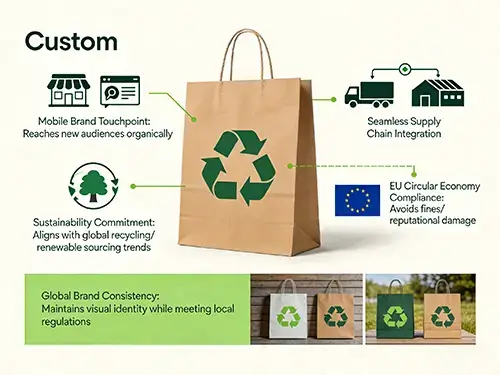
Custom paper bags play a strategic role far beyond retail carry-out. They act as a mobile brand asset, reinforce sustainability commitments, and integrate smoothly into existing supply chains. Unlike generic packaging, these bags turn every customer interaction into a brand touchpoint—whether a shopper carries them through a mall or posts them on social media, the design and message reach new audiences organically.
More importantly, paper-based packaging aligns with global regulatory trends that restrict single-use plastics. According to a summary by the European Commission, paper packaging is favored under circular economy policies due to its recyclability and renewable sourcing. This regulatory alignment makes these bags a risk-mitigation tool for brands operating in multiple regions, as they avoid fines and reputational damage associated with non-compliant packaging. EU circular economy packaging framework further emphasizes the role of paper-based solutions in reducing waste, making them a forward-thinking choice for compliance-focused brands.
From a brand perspective, these bags offer consistent presentation across regions, helping enterprises maintain visual identity while adapting to local compliance standards. For example, a global fashion brand can use the same logo and color scheme on its branded paper bags worldwide, while adjusting materials to meet regional recycling regulations—ensuring brand consistency without sacrificing compliance.
Material Selection and Structural Performance for Custom Paper Bags
Material choice directly impacts the durability, appearance, and environmental performance of custom paper bags. Kraft paper remains the most widely used option due to its strength and natural texture, making it a popular choice for branded paper bags in retail, apparel, and cosmetics industries.
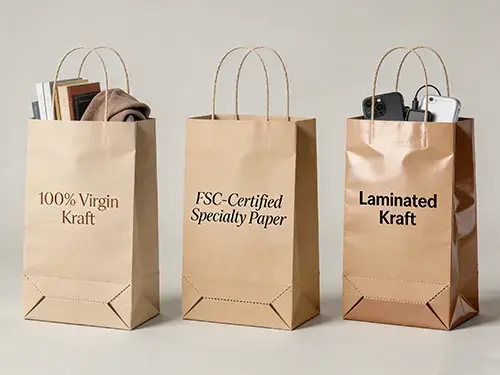
Core Materials for Branded Paper Bags
- Kraft Paper: Recycled or virgin kraft paper is ideal for standard branded bags, offering high tear resistance and load-bearing capacity (typically 80-120gsm for light to medium products like clothing or cosmetics).
- FSC-Certified Specialty Paper: For premium branded bags, FSC-certified paper demonstrates responsible sourcing, appealing to eco-conscious consumers and meeting enterprise procurement requirements.
- Laminated Paper: For heavier products (e.g., electronics accessories), laminated kraft paper adds water resistance and strength to branded paper bags without sacrificing recyclability.
Kraft paper branded bags are valued for high tear resistance and load-bearing capacity, making them suitable for apparel, cosmetics, and specialty retail. For heavier products, reinforced bottoms and laminated handles improve performance without sacrificing recyclability—ensuring the bags hold up during transport and use, reducing product damage and returns.
Worth noting is that brands often coordinate branded paper bags with other packaging formats such as folding carton boxes or shipping box systems. This creates a unified packaging language across retail, e-commerce, and logistics channels, where these bags complement other packaging elements to deliver a consistent brand experience.
Customization That Supports Brand Consistency
Customization for custom paper bags is not limited to printing a logo. Structural design, handle type, surface finishing, and color systems all contribute to brand recognition, turning these bags into a powerful marketing tool.
These bags allow brands to control how their logo, typography, and messaging appear in real-world environments. Techniques such as spot color printing, embossing, and matte coatings enhance perceived value without excessive material use—making the bags look premium while staying sustainable. For example, a luxury skincare brand might use embossed logos and matte finishes on its branded bags to convey elegance, while a casual apparel brand might opt for vibrant, water-based ink printing to reflect its playful identity.
According to a report summarized by Smithers, premium paper packaging increases brand recall and perceived product value by up to 35% in competitive retail environments—directly benefiting brands that invest in well-designed branded paper bags.paper packaging and brand perception research further confirms that uniquely designed branded bags are 2x more likely to be reused by consumers, extending brand exposure.
This is why many global brands standardize branded paper bags alongside limited-edition printed options for seasonal campaigns and flagship stores—ensuring consistent brand identity while keeping their packaging fresh and engaging.
Sustainability and Compliance Considerations for Custom Paper Bags
Sustainability is no longer a marketing option—it is a procurement requirement for many enterprise buyers, and custom paper bags are uniquely positioned to meet this demand.
Branded paper bags made from FSC-certified materials help brands demonstrate responsible sourcing, as FSC certification ensures paper comes from sustainably managed forests. Water-based inks and recyclable adhesives further reduce environmental impact, making these bags a truly eco-friendly choice compared to plastic or mixed-material alternatives.
It is worth noting that branded paper bags integrate more easily into recycling streams than mixed-material alternatives. According to the Environmental Protection Agency (EPA), paper packaging is one of the most recycled materials globally, with a recycling rate of 68% in the United States alone—far higher than plastic (8.7%). This compliance advantage is especially relevant in markets with strict waste management regulations, where these bags help brands avoid non-compliance penalties. paper recycling statistics from the EPA further support the case for paper-based packaging as a sustainable solution.
Comparing Paper Bag Options at a Glance
Feature | Standard Kraft Paper Bags | Premium Branded Paper Bags |
|---|---|---|
Material | Recycled or virgin kraft (80-120gsm) | FSC-certified specialty paper, optional lamination |
Print Quality | Basic logo printing (1-2 colors, water-based inks) | High-resolution branding, spot color, embossing, matte/gloss finishes |
Load Capacity | Medium (2-5kg, suitable for light retail goods) | Medium to high (3-8kg, with reinforced bottoms/handles) |
Sustainability | Recyclable, no extra eco-certifications | Recyclable, FSC-certified, water-based inks, recyclable adhesives (compliant with global regulations) |
Brand Impact | Functional, minimal brand exposure (basic logo only) | Strong brand visibility, premium perception, higher consumer reuse rate (2x vs. standard bags) |
Cost (Per Unit, 10k+ Order) | $0.10-$0.20 | $0.25-$0.50 (varies by customization and material) |
Ideal Use Case | Small retailers, budget-focused brands, everyday carry | Global brands, luxury retail, cosmetics, apparel, seasonal campaigns |
This comparison helps brands align packaging decisions with both budget and brand positioning, highlighting why branded paper bags are a more versatile and value-driven choice for brands with long-term goals.
Integration of Custom Paper Bags with Broader Packaging Systems
Packaging rarely exists in isolation. For large brands, custom paper bags must work alongside mailer box solutions, folding cartons, and warehouse workflows to ensure operational efficiency.
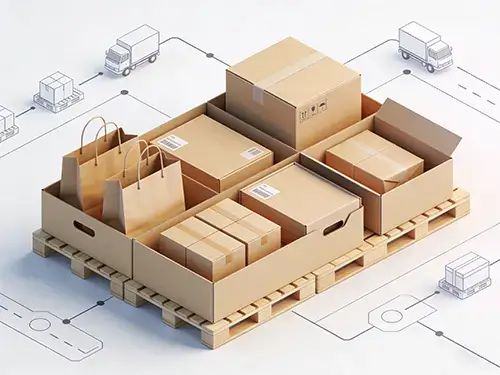
These bags can be dimensioned to match inner packaging, reducing wasted space during transport. This improves pallet efficiency by up to 20% and lowers shipping costs—an often-overlooked benefit of well-designed branded paper bags. For example, a clothing brand can design branded bags that fit perfectly inside their shipping boxes, eliminating empty space and reducing the number of boxes needed per shipment.
More importantly, a unified packaging system—where branded paper bags, cartons, and boxes follow consistent specifications—simplifies supplier management. When these bags and other packaging elements use the same materials and design standards, quality control becomes more predictable across production batches, reducing errors and brand inconsistency.
Cost Efficiency of Custom Paper Bags at Scale
Contrary to common assumptions, branded paper bags are not inherently expensive. When produced at scale (10,000 units or more), unit costs become highly competitive—often comparable to low-quality plastic bags or generic paper bags.
Standardized materials, optimized die lines, and bulk production runs reduce waste and improve consistency for branded paper bags. For brands operating across multiple regions with long-term packaging programs, this scalability translates to significant cost savings. For example, a global coffee chain that orders 1 million branded paper bags annually can negotiate lower unit costs (up to 30% less than small-batch orders) and streamline production across regional manufacturers.
Branded paper bags also reduce indirect costs by minimizing damage, returns, and brand inconsistency issues that arise from low-quality alternatives. A study by the Packaging Association found that brands using reinforced paper bags experienced a 15% reduction in product damage during transport, leading to lower return rates and cost savings on replacement products.
Choosing the Right Manufacturing Partner for Custom Paper Bags
The success of custom paper bags depends heavily on manufacturing expertise. Design capability, material sourcing, quality control, and delivery reliability all play a role in ensuring these bags meet brand standards.
Established manufacturers (like Ecofriendpack) help brands balance aesthetics, sustainability, and cost for branded paper bags. They provide guidance on structural reinforcement (e.g., when to add reinforced bottoms for heavier products), printing limitations (e.g., color matching across regions), and compliance requirements (e.g., meeting EU or US recycling standards for paper-based packaging).
More importantly, long-term partnerships allow brands to evolve their paper bag designs without restarting the entire development process each season. For example, a brand can update the print design of their branded bags for a holiday campaign while retaining the same material and structural specifications—saving time and money.
A Thoughtful Conclusion for Forward-Looking Brands
Custom paper bags represent more than a packaging choice. They reflect how a brand thinks about sustainability, customer experience, and operational discipline. In an era where consumers and regulators demand more responsible packaging, these bags offer a balanced solution that enhances brand value while meeting sustainability and compliance goals.
As regulations tighten and consumers become more conscious, paper-based solutions continue to replace disposable alternatives across industries. Brands that invest early in well-designed, scalable paper bags gain both compliance confidence and market trust—turning packaging into a competitive advantage.
At Ecofriendpack, we support this transition by providing end-to-end branded paper bag solutions tailored for brands with long-term, high-standard packaging needs. From material selection (FSC-certified paper, water-based inks) to mass production, our focus remains on sustainable performance, consistent quality, and reliable delivery for global enterprises. Whether you need standard kraft paper bags for retail or premium, embossed options for flagship stores, we partner with you to create packaging that balances brand value and sustainability.
Ready to elevate your brand with branded paper bags? Contact us today to get a free quote and design consultation—let’s build packaging that works for your brand, your customers, and the planet.
In the future of packaging, thoughtful design and responsible materials are no longer separate goals. They are the same conversation—and branded paper bags are at the heart of it.