
The production of a paper packaging box is a meticulous process that requires careful attention to detail at every step. From initial design considerations to the final quality check, each stage plays a crucial role in creating a packaging solution that meets industry standards and customer expectations. In this article, we’ll walk you through the 10 most detailed steps involved in the paper packaging box production process. This guide is perfect for anyone looking to understand how these packaging boxes are made and the key factors that influence their quality.
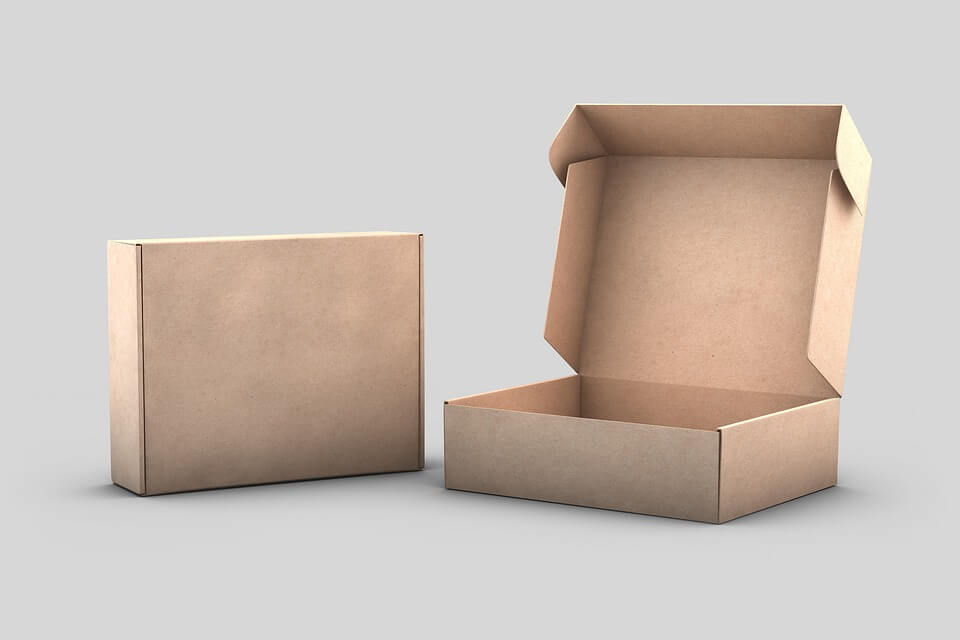
Step 1:Design Phase of a Paper Packaging Box
Designing a paper packaging box for product is a process that is very creative and strategic. This will be achieved through careful consideration of industry-specific needs and close collaboration with our clients. As manufacturers, we make sure that the design process integrates each step with production capabilities. Here’s a detailed look at how we guide our clients through this critical stage.
Preliminary consultation and conceptualization
Specific Industry Requirements:
Various industries have their own needs when it comes to materials and design for packaging. We always ensure we understand this and have the materials, graphics, and general design molded in respect to an industry’s standards.
Concept Concepts:
Having this information, we shall now make some rough design concepts. All the following concepts have in mind the considerations of the client’s branding, target market, and product specifications.

Material and Cost Determination
Material Selection:
We work with the client to choose the appropriate materials based on the product’s needs and industry standards. As the manufacturer, we provide detailed insights into the costs associated with material choices, order quantities, printing techniques, and design complexity to determine the final price.
Sample Provision:
We provide the client with reference sample boxes, graphic materials, and details on processes and material requirements. This helps in making informed decisions and ensures that the design meets both aesthetic and functional needs.

Paper Selection
Paper Type:
We assist the client in selecting the correct type of paper, such as a coated or art paper, or a pearl paper, which will be compatible with the type of finish and toughness that the product requires.
Thickness Factor:
The thickness of the paper is a crucial factor too. It should not be too thick to get crumbled once lamination is done, but on the other hand, it should also not be too thin to the extent that it does not yield proper embossing or debossing effects.
Effects of surface finishing:
This is the decision made in selecting the appropriate finishing for the package to ensure optimization of its appearance and feel, from glossy to matte or special textures.
Step 2: Sample Production Prototyping and Customer Feedback
Once the concept design is complete, a prototype of the paper packaging box is produced. This sample is sent to the customer for any comments. If the customer is not satisfied with the result, changes are made appropriately until an agreement on the final design is reached.
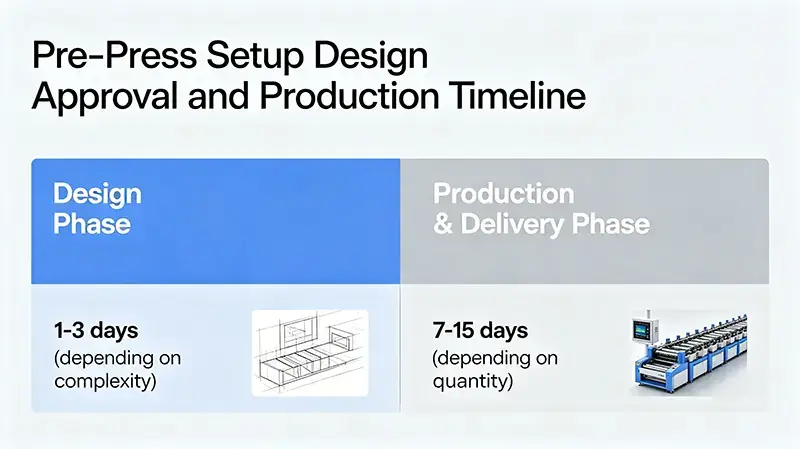
Step 3: Pre-Press Setup Design Approval and Production Timeline
Once the prototype is approved, the next step is to finalize the design and provide the production timeline. Typically, the design process is estimated to take up 1-3 days, and the total production as well as delivery can take about 7-15 days, depending on the complexity and quantity of the order.
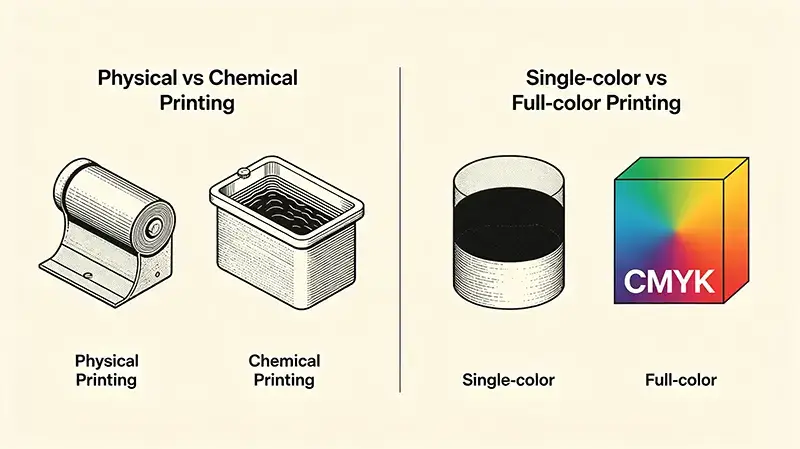
Step 4: Material Printing
Printing is a very important activity in the process of manufacturing paper packaging boxes. It can be classified based on the method of printing – whether physical or chemical – or the number of colors used; whether single-color or full-color printing. The selection of a particular kind of printing will affect the final look and quality of the package box.
Types of Printing
Offset Printing
This is one of the most popular printing techniques whereby an inked image is transferred through a plate to a rubber blanket, and then finally to the printing surface. This type of printing is usually linked with high-quality prints with amazing color details and is considered one of the cheapest ways of producing bulk copies of prints. These prints would best be manufactured by offset printing: complex designs and fine print for the packaging product industry.
Digital Printing
Digital printing is a modern type of printing that prints digital-based images directly onto the media to be printed, without using a plate. It is flexible and fast, producing short runs or personalized packaging in no time. In layman’s language, digital printing ideally works with personalized packaging solutions and prototypes.
Flexographic Printing
Flexo can be described as a form of printing that employs flexible relief plates to print on quite a number of substrates—papers, plastics, and metals. It is mainly known for being economical with large-scale production and thus applied in the printing of labels, packaging, and corrugated boxes. The largest benefit of flexo printing would be the ability to print large solid areas and simple designs.
Screen Printing
In this method, the ink is pressed through a mesh stencil and transferred onto the printing material. It is one of the most versatile kinds of printing which can be carried out on virtually any surface—paper, plastic, fabric, or metal. One great benefit of screen printing is that it gives high-intensity colors and is usually seen in packaging that demands bold striking designs.
Step 5: Surface Decoration Processing to Enhance the Aesthetic Beauty of Packaging Boxes
Decoration of the surface imparts a final finishing touch to a package. Techniques like embossing, debossing, foil stamping, and spot UV can be used for the ‘look and feel’ of the packaging box.
Learn more about surface decoration processing ……
Step 6: Die-cutting
This is an important step; it means that the printed sheets are cut into the right shapes and sizes just as in the design. In this process, high precision is applied because any slight deviation will impact the quality and eventually assembly of the product.
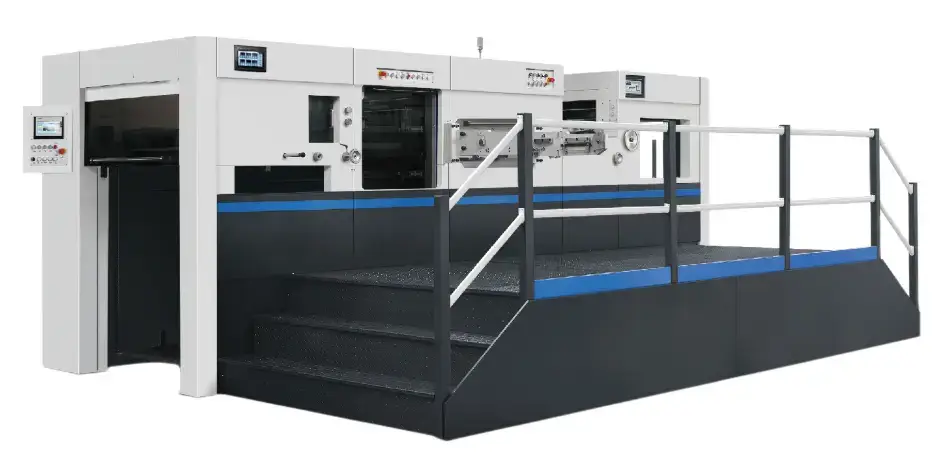

Step 7: Slotting Making
Slotting is an important step in the manufacture of a paper packaging box for high-quality products with the necessity for specific structural integrity. This cutting is done on greyboard sheets having a thickness between 1-4mm in such a way as to create V-shaped slots, each with a 0.25mm connecting layer. Adjust the angle of these slots—commonly 90 or 120 degrees—depending on the structure of the product.
Step 8: Mounting and Gluing
Mounting is a process in which the selected paper, for instance, coated paper, art paper, velvet, leather is mounted on the greyboard. This makes the greyboard become one whole new entity that is in line with the aesthetic needs of the package. It is pertinent to mention here that, in standard packaging boxes, after the mounting process, die-cutting is applied, while in high-end paper packaging boxes, die-cutting is applied after the mounting process—this is not to damage the outer material and to keep an overall appearance harmonious. Besides, for complex box structures, manual gluing seems to be unavoidable since machines are not always quite precise.
Step 9: Inspection Ensuring Quality Assurance
All paper packaging boxes are always inspected completely for quality assurance. This step ascertains defects in printing, die-cutting, slotting, and gluing, since the end product should be free of any.
Step 10: Packing and Warehousing Final Packaging and Storage
Upon a pass through the quality inspection, the paper packaging boxes are taken for careful packaging and made ready for dispatch. It is through the process of packaging that quality of boxes for taking to customers is maintained in a safer manner during their transportation and storage.
FAQs
1. What types of paper are commonly used in paper packaging box production?
Common types of paper include coated paper, art paper, and pearlescent paper. The choice depends on the desired finish and print quality.
2. How is the thickness of the paper selected?
The thickness is chosen based on the balance between durability and ease of processing. Paper that’s too thick may wrinkle, while thin paper may not hold embossing well.
3. What is the importance of die-cutting in packaging box production?
Die-cutting ensures that the paper is cut into precise shapes and sizes, which is essential for the accurate assembly of the final packaging box.
4. Why is prototyping necessary in the production process?
Prototyping allows customers to review and approve a sample before mass production, ensuring the final product meets their expectations.
5. What surface decoration techniques can be used on paper packaging boxes?
Surface decoration options include embossing, debossing, foil stamping, and spot UV, all of which enhance the visual and tactile appeal of the packaging.
6. How long does it typically take to produce a paper packaging box?
The production timeline varies, but it usually takes 7-15 days from design approval to delivery, depending on the complexity of the order.